What Was the Tower of Babel in the Bible?
The Tower of Babel, described in Genesis 11, shows humanity united around pride, the pursuit of fame, and resistance to God’s purpose. The episode explains, in biblical and theological language, the confusion of languages and the scattering of the peoples, while also offering lessons about humility, dependence on the Lord, and true greatness.
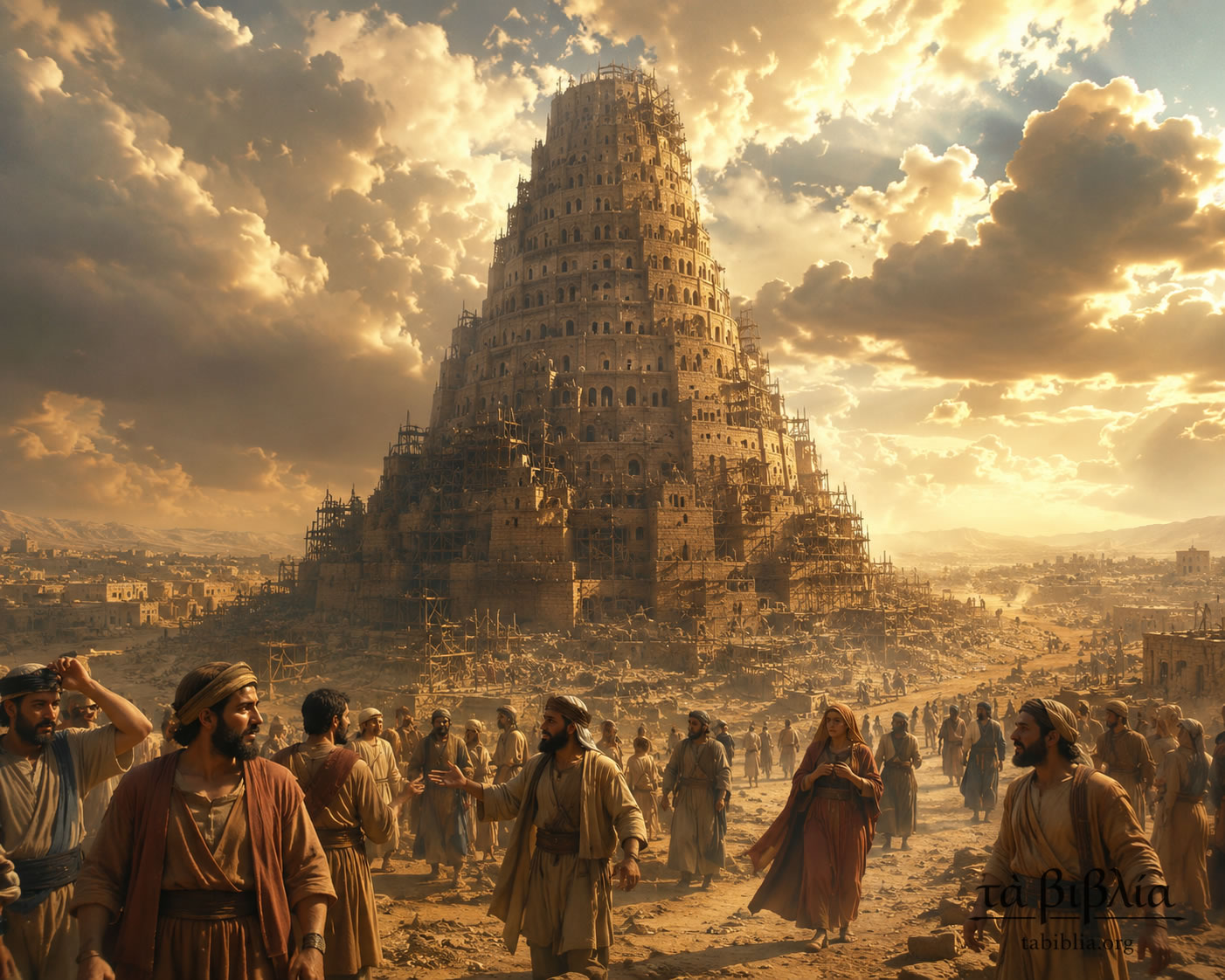
Table of contents
The story of the Tower of Babel is among the most curious and striking passages in the Old Testament. Recorded in Genesis 11, this biblical narrative explains the confusion of languages, the scattering of the peoples, and the danger of human pride before God. Although it is a relatively short account, it raises deep questions: why did people want to build such a high tower? What was wrong with that project? Why did God confuse their languages? And what is the biblical meaning of the Tower of Babel for readers today?
At first glance, the narrative may seem to be only an ancient explanation for the origin of different languages and peoples. In the biblical context, however, it goes beyond that: it speaks about human pride, the desire for greatness, resistance to God’s purpose, and the limits of a humanity that tries to organize itself without acknowledging the Lord.
According to the Bible, after the flood, Noah’s descendants settled on a plain in the land of Shinar and decided to build a city with a tower whose top would reach the heavens. Their stated intention was to make a name for themselves and keep from being scattered across the earth. At this point, the text reveals the spiritual center of the narrative.
In summary, the Tower of Babel was a human attempt to build greatness, security, and fame without submission to the Lord. For this reason, the episode became a biblical portrait of collective pride, the confusion of languages, and the scattering of the peoples.
Where Does the Tower of Babel Appear in the Bible?
The narrative of the Tower of Babel appears in Genesis 11:1-9. The text says that, at that time, the whole earth had one language and one way of speaking. The people found a plain in the land of Shinar and began to live there. Then they said to one another that they would make bricks and bake them thoroughly, using brick instead of stone and bitumen instead of mortar.
Then they decided to build a city and a tower. The phrase that summarizes the heart of that project is very significant: they wanted to make a name for themselves and prevent themselves from being scattered over the earth. The tower, therefore, was not merely an architectural work. It symbolized a collective ambition, an attempt at security and identity built without dependence on God.
The account continues by saying that the Lord “came down” to see the city and the tower that the people were building. This language, common in biblical narratives, communicates divine attention and intervention in a simple way. God then confused their language so that they could no longer understand one another, and He scattered them over the face of the earth. For this reason, the place received the name Babel, which the text itself associates with the confusion of languages.
What Does Babel Mean in the Bible?
In the context of Genesis, the name Babel is connected to the confusion of languages. The biblical text makes an association between Babel and God’s act of confusing human language. Many scholars also observe Babel’s connection with the biblical tradition related to Babylon, which later becomes highly significant in Scripture as an image of power, pride, and opposition to God.
This subject should be treated with balance. Not every historical detail about Babel can be affirmed with absolute certainty, and there are discussions among scholars about the exact relationship between the biblical narrative, ancient Mesopotamia, and the structures known as ziggurats.
In general terms, many scholars suggest that the tower described in Genesis may have some relationship to types of monumental buildings common in that region. Even so, the biblical text is more interested in the spiritual meaning of the episode than in the technical details of architecture.
In the Bible, Babel becomes more than a place. It comes to represent a human posture: the attempt to build greatness, security, and unity without submission to God. Later, Babylon appears in Scripture as a symbol of empire, arrogance, and spiritual seduction. For this reason, the Tower of Babel is often remembered as a portrait of human pride organized on a collective scale.
What Was the Problem with Building the Tower of Babel?
Building a city or a tower was not, in itself, a sin. The Bible does not condemn work, creativity, social organization, or human development. The problem was in the motivation and direction of that project. The people said: “let us make a name for ourselves”. This expression reveals the desire for self-exaltation, one of the central themes for understanding the meaning of the Tower of Babel.
In addition, they wanted to avoid being scattered over the earth. This intention contrasts with the purpose presented earlier in Genesis, when God blesses humanity and commands it to multiply and fill the earth, as seen in Genesis 1:28 and reaffirmed in Genesis 9:1. The building of Babel seems to represent resistance to that calling. Instead of spreading out according to the divine purpose, those people sought to concentrate power, identity, and security around a human work.
The sin of Babel, therefore, was not simply building high. It was turning that project into a symbol of independence, fame, and resistance to God’s purpose. The tower became a visible expression of a heart that sought security and greatness without humility.
The Tower of Babel and Human Pride
The Tower of Babel is one of the strongest images in the Bible concerning human pride. Pride, in the biblical sense, is not merely having confidence or recognizing abilities received from God. The pride condemned in Scripture is the posture of someone who places himself at the center, despises human limits, and lives as though he did not need the Lord.
At Babel, humanity appears united, organized, and able to use the technical resources available in its context. Those people knew how to produce bricks, plan a city, and work together. The text does not present them as weak or disorganized. On the contrary, it shows a society with great capacity for achievement. The problem is that this capacity was being used to build an identity based on its own glory.
This makes the story very relevant today. Not every human achievement is wrong. The Bible values wisdom, work, planning, and excellence. However, when progress becomes idolatry of one’s own strength, the heart moves away from God. Babel reminds us that a work may look impressive in human eyes and still be born from spiritually dangerous motivations.
Why Did God Confuse the Languages?
In the face of this project marked by pride and resistance, God intervenes. According to the biblical narrative, He confused human language in order to interrupt that project and scatter the people over the earth. This action may seem severe on a first reading, but in the context of the account, it functions as a restraint on human arrogance.
The unity of Babel was not based on love, justice, or obedience to God. It was a unity aimed at self-promotion and resistance to the divine purpose. When God confuses the languages, communication among them is broken. Without common understanding, the project loses strength. What had once been a humanity concentrated around a collective ambition begins to disperse.
Thus, the very outcome they wanted to avoid ends up happening: the peoples are scattered over the earth. In the Genesis account, the diversity of languages is connected to this moment of scattering. This does not mean that the Bible is interested in explaining every linguistic detail technically, as modern linguistics would. The focus of the text is theological: to show that God governs human history and that no project of collective pride stands above His sovereignty.
The Scattering of the Peoples in the Bible
The scattering of the peoples is an important theme in Genesis. Before the Tower of Babel, chapter 10 presents a kind of table of nations, showing Noah’s descendants spreading out by lands, families, languages, and nations. Then Genesis 11 explains, in narrative and theological form, how this scattering relates to the episode of Babel.
The biblical text shows that God did not want humanity to close itself within a single structure of power driven by pride and fear. The command to fill the earth involved expansion, multiplication, and diversity. Babel was an attempt to control that movement. God, however, directed history so that the peoples were scattered.
This scattering also prepares the setting for the rest of the biblical narrative. Immediately after Babel, Genesis presents the line of Shem and then the call of Abram. This is very significant. After showing the confusion of the nations, the Bible begins to tell how God calls one man and promises, through him, to bless all the families of the earth, according to Genesis 12:1-3. In other words, God’s answer to human confusion is not to abandon the nations, but to begin a plan of blessing and redemption.
Biblical and Historical Curiosities About the Tower of Babel
One important detail about the Tower of Babel is that the text mentions the use of baked bricks and bitumen. This element fits known ancient building practices in the region of Mesopotamia, where stone was not as common in some areas and mud bricks were widely used. Although brief, the biblical text includes this concrete element from the material culture of the time.
Another interesting observation is the ironic contrast present in the narrative. The people wanted to build a tower whose top would reach the heavens, but the text says that the Lord “came down” to see it. The intention seems to be to highlight the difference between the greatness imagined by human beings and the real greatness of God. What seemed immense in human eyes was still small before the Lord.
It is also noteworthy that Babel appears before the call of Abraham. This helps us understand the spiritual sequence of Genesis. First, we see humanity seeking to make a name for itself. Then, in Genesis 12, God calls Abram and promises to make him into a great nation and make his name great. The difference is profound: at Babel, the name is pursued through pride; in Abraham, the name is received as part of God’s promise and mission.
Babel and Pentecost: Is There a Connection?
Many Christians see a beautiful contrast between Babel and Pentecost. At Babel, the languages are confused and the peoples are dispersed amid misunderstanding. In Acts 2:5-11, on the day of Pentecost, people from many nations hear the mighty works of God in their own languages. This is not simply a literal “undoing of Babel,” but it does show that, in Christ and through the work of the Holy Spirit, diversity does not need to be a barrier to God’s message.
At Pentecost, God does not eliminate the diversity of languages. On the contrary, He communicates His work within that diversity. This points to a unity different from the unity of Babel. Babel sought a unity centered on human pride. Pentecost reveals a unity produced by God, centered on the gospel, reaching different peoples without erasing their identities.
This comparison should be made carefully, because the texts belong to different contexts. Even so, it is spiritually rich. The Bible begins by showing the confusion caused by human arrogance and, later, presents the grace of God reaching people from many languages and nations.
What Is the Meaning of the Tower of Babel for Today?
The Tower of Babel remains important because it speaks of something that did not remain trapped in the past. The desire to “make a name” still accompanies the human heart. It can appear in personal projects, institutions, cultures, governments, and even religious environments. Whenever one’s own glory becomes more important than the will of God, the spirit of Babel draws near.
For this reason, the meaning of the Tower of Babel for today is not only in the origin of the scattering of the peoples, but also in the spiritual warning against self-sufficiency. The narrative shows that true security does not come from fame, control, or human strength, but from humble dependence on the Lord.
The story also teaches us about limits. Human ability is real, but it is not absolute. We can create, build, plan, and advance, but we remain dependent on God. The Bible does not call us to passivity, but to humility. The problem is not working with excellence; the problem is turning our own excellence into a throne.
Another current point is diversity. The existence of different peoples, cultures, and languages is often seen only as a barrier. However, throughout the Bible, we see God working among the nations. Human diversity is not beyond the Lord’s reach. The gospel, especially in the New Testament, shows God calling people from every tribe, language, people, and nation, as we see in Revelation 5:9 and 7:9.
Practical Applications for the Christian Life
The first application of the Tower of Babel is the need to examine our motivations. Not every large project is born from pride, but every heart needs to be watched. We can do good things for the wrong reasons. We can seek recognition when we should seek faithfulness. We can also use gifts received from God to build an image of self-sufficiency.
The second application is to learn to obey God’s purpose even when He takes us out of our comfort zone. The people of Babel wanted to remain concentrated, protected by their own project, and famous. God scattered them. Many times, obedience moves us into places, responsibilities, and relationships that were not in our plans. Biblical faith learns to trust that God’s purpose is better than our attempt at control.
The third application is to value the right kind of unity. Not every unity is good in itself. People can unite to do good, but they can also unite around pride, injustice, or rebellion. The unity that pleases God does not arise from human vanity, but from truth, love, humility, and submission to the Lord.
Finally, Babel invites us to exchange the pursuit of our own name for the pursuit of God’s glory. This is a deep change. Instead of living by asking how we can be seen, recognized, and admired, the Christian is called to ask how he can serve, obey, and reflect the character of Christ in the world.
Conclusion
The Tower of Babel was more than an ancient construction. According to the Bible, it represented a human attempt to attain greatness, security, and fame without depending on God. The episode speaks about pride, confusion, and the scattering of the peoples, but it also points to a greater truth: the Lord remains sovereign over history.
The account in Genesis 11 shows that the Lord is not impressed by outward greatness when the heart is filled with arrogance. At the same time, the Bible does not end at Babel. After the confusion, God calls Abraham. After the dispersion, the promise reaches the nations. And in the New Testament, we see the gospel being proclaimed to people of many languages and peoples.
For this reason, the story of the Tower of Babel remains so relevant. It reminds us that human projects need humility, that unity without God can become dangerous, and that true greatness is not found in making a name for ourselves, but in living for the glory of the One who governs all nations. Before Babel, today’s reader is invited to look at his own heart and ask: am I building for my own exaltation or to honor God?
This account also invites the reader to continue reflecting on other related biblical themes, such as the call of Abraham, the promise made to the nations, Pentecost, and the unity of God’s people in Christ.